See.
Cross.
Close.
A 15-minute crash course in crypto arbitrage — price spread and funding rate explained — followed by your Crossax handbook.
What you'll learn in 15 minutes
This guide has three jobs. First, teach you what spread arbitrage actually is, using language a careful reader can follow over coffee. Second, introduce Crossax as the tool that watches every pair on ten exchanges for these setups, 24 hours a day. Third, walk you through your plan so the first alert you get makes sense.
You can read the whole thing in about fifteen minutes. You can also skim the tier tour and come back when you have a question.
Understand
The math in plain English. No jargon without a definition.
Meet
Crossax on Telegram and on the web.
Apply
Your tier's tour, reference cards, and FAQ hits.
We show you where the edge is. We don't trade for you. Happy hunting.
Arbitrage, in plain English — crypto arbitrage explained
Picture a market square on a Saturday morning. Two stalls sell the same apples. Same variety, same freshness, same weight. Stall A charges a dollar. Stall B charges a dollar and one cent. You can see both signs from where you're standing.
If you buy a basket of apples at Stall A for a dollar each and walk ten steps over to Stall B, where the going rate is one-oh-one, someone there will happily take them off your hands at that price. You just earned a penny per apple. Minus whatever cost there is to move them, which in a market square is basically your time.
That penny is the spread.
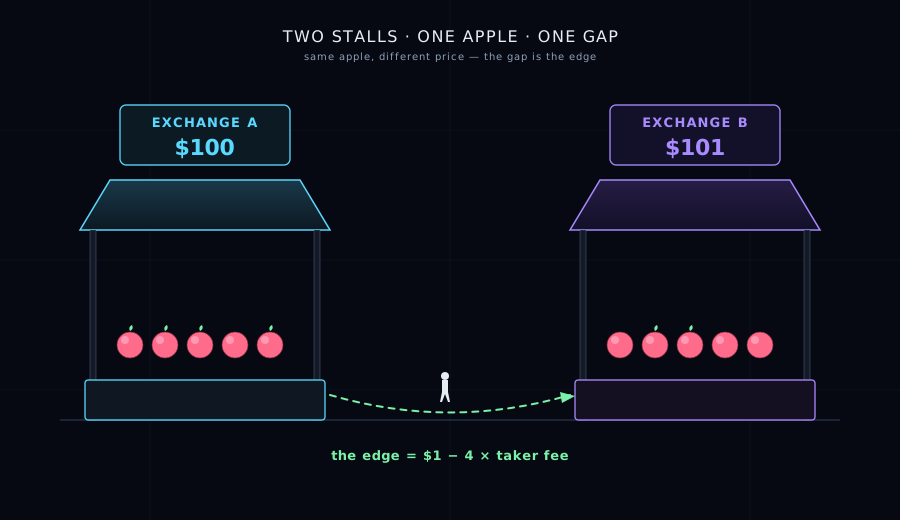
Arbitrage is the old, unglamorous business of noticing that two markets are selling the same thing at different prices, and closing the gap. Nothing about it requires a prediction. You are not guessing where apples are going next week. You are reading two price tags that already exist and acting on the difference between them.
Why does the gap exist? Different stalls have different customers, different inventory, different speeds. The world isn't perfectly connected, so prices drift apart for a while. Crypto exchanges are stalls that never close — Bybit, Binance, OKX, Bitget, MEXC, BingX, KuCoin, Gate, HTX, Phemex. Ten stalls, one asset, ten slightly different price tags. The math is identical to the apple cart; the only twist is that you can't physically move a futures contract, so you close the gap using two trades at once. That's the next page.
Key takeaway: arbitrage is mechanical, not predictive. You don't need to know where Bitcoin is going tomorrow. You need to see that it's priced differently today.
Price-spread arbitrage
You spotted the gap. Now you close it.
On the apple stall, you carried the basket across. In crypto, you can't carry a perpetual futures contract anywhere. The contract lives on its exchange and stays there. So instead of moving one position, you open two in opposite directions, on the two exchanges where the prices disagree.
- Exchange A shows the perpetual at a lower price. You open a long there, buying at the ask.
- Exchange B shows it at a higher price. You open a short there, selling at the bid.
- Your dollar exposure now nets to zero. The market can do whatever it wants during your hold.
- You care about one thing: the gap between the two exchanges closing. That's convergence.
- When the gap has closed enough, you close both positions. What's left is the starting spread, minus four taker fees.
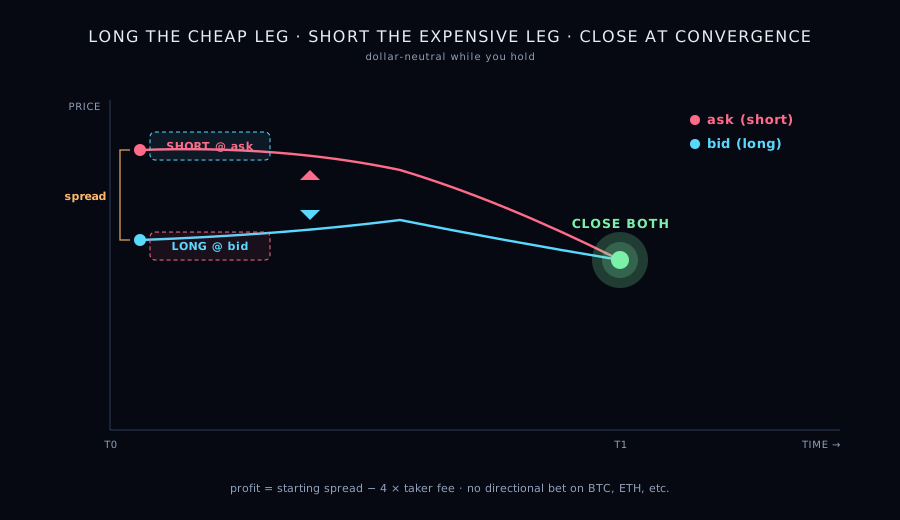
Four fees because every position has an entry and an exit, and you have two positions. Four fills, four fee deductions. The Smart Spread number Crossax shows already has those fees subtracted.
The beauty of this setup is how boring it is. You are not bullish, you are not bearish. You are long and short the same asset at the same time, in roughly equal size. The only question is whether the gap closes faster than your patience runs out. And a word on operational risk: dollar-neutral means neutral to market direction, not free of risk. Exchange downtime, liquidation on the leg that moves first, withdrawal freezes, and latency between fills are all real risks you carry — Crossax is a monitor, not a hedge against them.
Key takeaway: a dollar-neutral position that profits when the gap closes.
Funding-rate arbitrage
Price spreads are one source of edge. Funding is another. On some setups, funding matters more than price.
A perpetual futures contract has no expiry. Left alone, its price could drift away from spot forever. To keep the two anchored, exchanges use funding: every few hours, the crowded side pays the other side. If longs outnumber shorts, longs pay shorts. If shorts outnumber longs, shorts pay longs. The payment is proportional to position size, and the rate is published ahead of each settlement.
Funding settles on a schedule. Some pairs pay every 8 hours, some every 4, depending on exchange and pair.
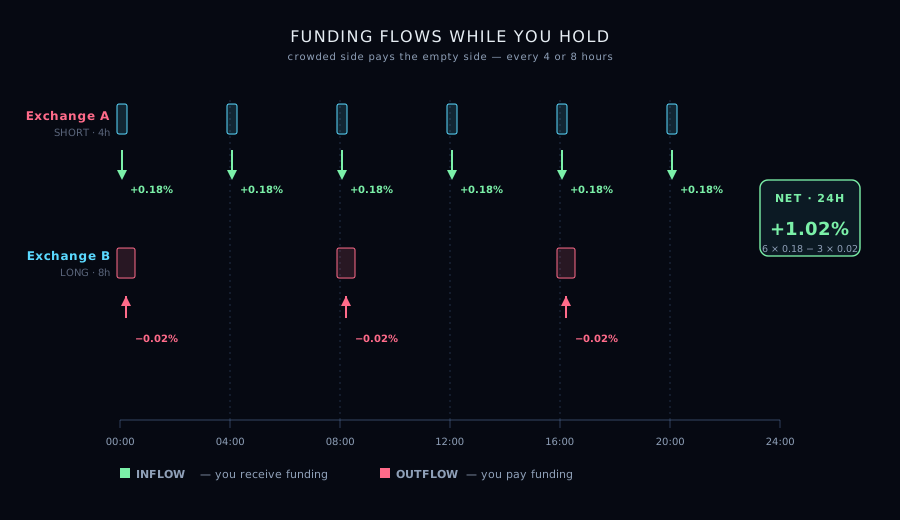
Now layer that onto a price-spread trade. On your long leg, if longs are paying shorts, funding comes out of your position. On your short leg, funding flows in. Net the two together across 24 hours. When the math works out positive, you are earning money just for holding. Price convergence, if it happens, stacks on top. When it's negative, you're paying to hold, and the price gap needs to close faster to compensate.
One wrinkle. Funding is only trustworthy when the two legs settle on similar schedules. Crossax flags a pair as funding synchronized when both legs share the same interval AND their next settlement times are within 30 minutes of each other. Out-of-sync pairs get a visible flag — that's your signal to be more cautious. And remember: leverage is present on perpetual futures. It amplifies both funding gains and price-swing losses. A funding-positive setup that moves against you mid-settlement can still liquidate.
Key takeaway: funding is a second profit source that can pay you while you wait for price convergence, or carry the whole trade on its own.
Meet Crossax — the cross-exchange crypto monitor
Crossax watches every pair on ten exchanges, 24 hours a day, and pings you when a spread is actually profitable. Funding and fees are already priced in.
We show you where the edge is. The trade itself is yours.
Crossax on Telegram — the main-menu of a telegram arbitrage alert bot
@crossax_arb_bot is the Telegram half of the product. Open it, tap /start, and you land on the main menu. Each button is a tool you'll use.
One number: net expected edge over 24h.
When you send /spreads, each card shows the two exchanges, ask and bid prices, 20-level orderbook depth, next funding time, and the Smart Spread 24h number from page 6. The cooldown (default 60 minutes) controls how often the same pair can re-alert.
Crossax on the web
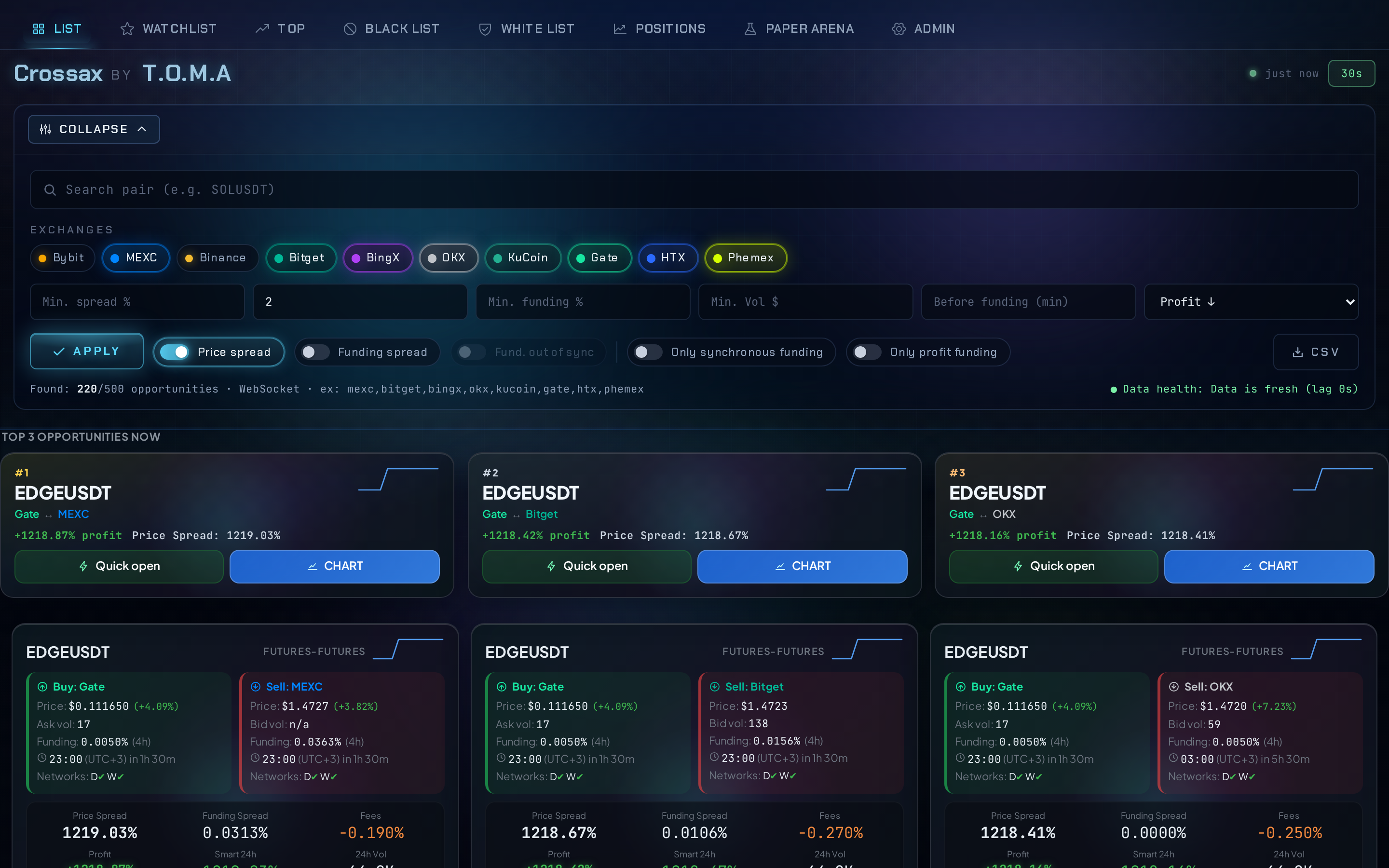
The dashboard lives at crossax.xyz/app/. It's a separate surface from Telegram, with its own layout and a different rhythm. You open it via a magic link.
How the magic link works
- In Telegram, send
/webapp. The bot replies with a single-use link. - The link expires in 10 minutes and can be used exactly once.
- Open it in a browser. The app exchanges the token for a session cookie. The link strips from the URL.
- You're in. The cookie keeps you logged in until you clear it.
No password. No email. Nothing to remember.
What you'll find inside
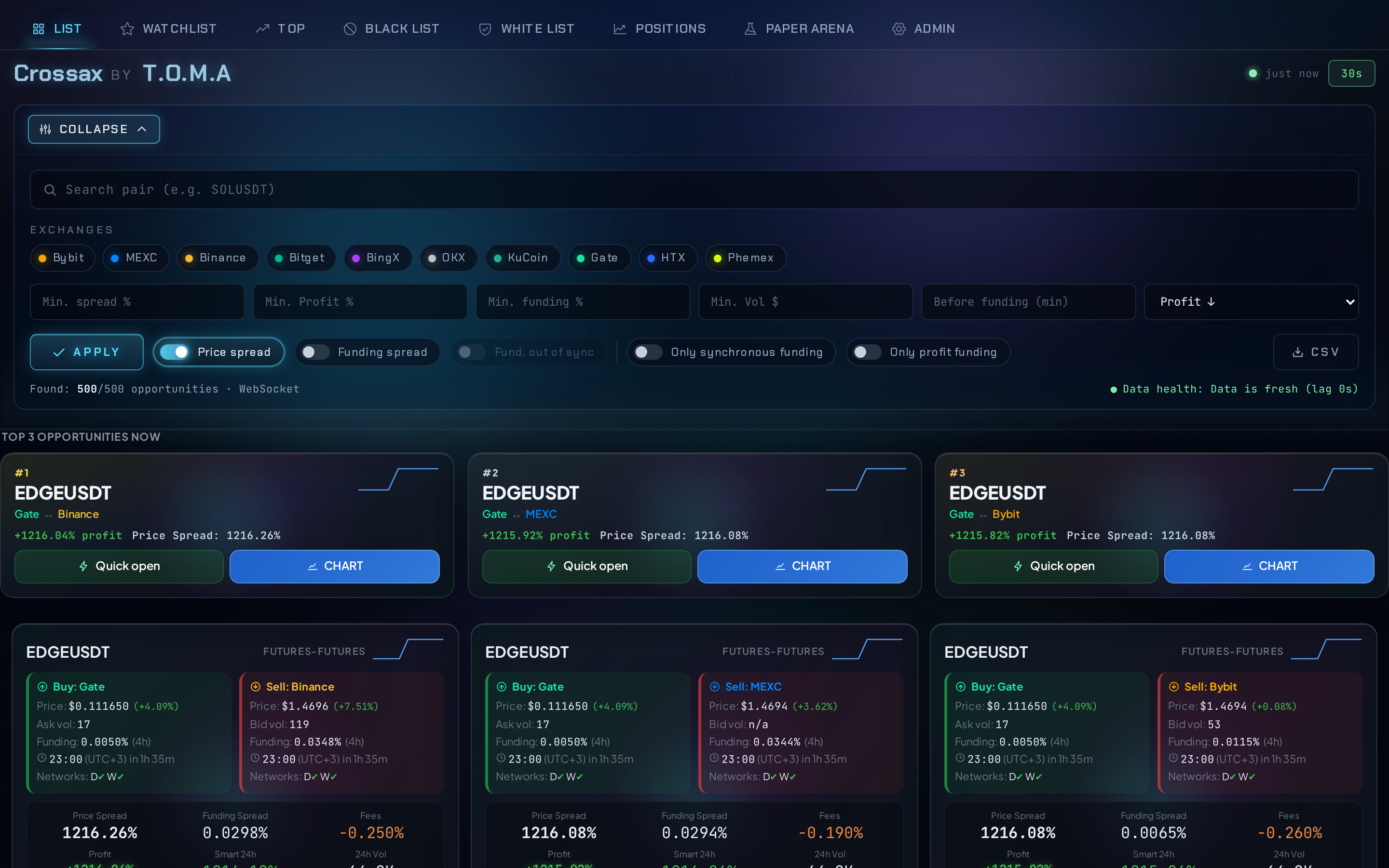
- List — live spreads with the 11-field FilterPanel.
- Top — best setups over 1, 7, or 30 days.
- Positions — live PnL with funding accrual.
- Paper Arena — simulator with parity to live filters.
- Chart — convergence history, 5 timeframes.
- Watch / Black / White — list management.
The dashboard is included on Speculator and Maximus. Tiro and Gladiator users can open the public landing at crossax.xyz/app/, but paid tabs prompt for an upgrade.
Four plans, four fits
| Tiro$29/mo | Gladiator$49/mo | Speculator$39/mo | Maximus$79/mo | |
|---|---|---|---|---|
| Price-spread TG alerts | ✓ | ✓ | — | ✓ |
| Funding TG alerts | — | ✓ | — | ✓ |
| Web dashboard | — | — | ✓ | ✓ |
| Paper Arena | — | — | ✓ | ✓ |
| Positions tracker | — | — | ✓ | ✓ |
| Top Spreads | — | — | ✓ | ✓ |
| Whitelist | — | — | ✓ | ✓ |
The tiers are a grid, not a ladder. Tiro and Gladiator are for traders who live in Telegram. Speculator is for traders who live in a browser. Maximus is for people who use both. Gladiator isn't Tiro plus one more feature; it's Tiro with funding alerts added. Speculator isn't Gladiator's next step; it's a different surface entirely.
Auto-renew is off. Each term starts manually on /subscribe. Annual saves up to 25% — a full year on Maximus is $711 (3 months free). The bot quotes per-month and total upfront on /subscribe Stage 2 — no surprise at checkout.
A 72-hour Maximus trial exists for users who subscribe to @crossax_by_toma (queue depth and caps apply).
Tiro — $29
What you see first
A Telegram chat with @crossax_arb_bot. You send /spreads and get five cards back. Each card is a pair: two exchanges, two prices, a Smart Spread 24h number, orderbook depth, and funding context. When a pair crosses your alert threshold, a new card lands in the chat on its own.
How to start
- Open
@crossax_arb_botand send/start. - Send
/settings → Priceand setmin_price_spread. 4% is the default. - Pick your exchanges in
/settings → General. - Turn
monitor_enabledon.
A typical dayhypothetical
The numbers in the mock are an example of the rhythm, not typical results.
You wake up, check Telegram. There's an overnight ping: a pair has gone wide between two exchanges. You decide if it's worth the trade, open long and short on your own. Over the next few hours, the spread tightens. You close both legs. Mid-afternoon, another card arrives for a funding-driven setup you skip because Tiro doesn't include funding alerts. You adjust your cooldown up to 90 minutes because the volume felt high.
Where this ends
No funding alerts. No Chart button on cards — instead: "Full convergence chart on the web — included with Speculator or Maximus." That's honest-gating.
Gladiator — $49
What you see first
Every price-spread card Tiro gets, plus a second kind: the funding alert. Similar on top, but the summary leads with funding_spread instead of price_spread, and a verdict line tells you how much funding will matter over your hold.
How to start
/subscribe → Gladiator./settings → Funding, setmin_funding_spread. 0% default.- Decide on
funding_alert_minutes_before— 10 min default, range 1–120. - Toggle
only_synchronous_fundingon for stricter funding math.
A typical dayhypothetical
Illustrative rhythm. Figures below are examples, not typical results.
A price-spread card on a pair you've traded before. An hour later, a funding alert: funding_spread 0.8%, verdict moderate impact — funding contributes roughly a third of your 24h edge. You read Smart Spread 24h, which already has funding and fees baked in. Later: a verdict of significant impact — funding is doing most of the work.
Where this ends
Top of the Telegram-first ladder. Funding alerts land. Charts don't — same honest-gating line. No web dashboard, Paper Arena, or Positions tab. If any of those matter, Speculator is the sibling plan. Both surfaces? Maximus.
Speculator — $39

What you see first
crossax.xyz/app/ with the List tab open. FilterPanel on the left (11 fields). Live grid of spread cards on the right, updating via WebSocket. Tabs across the top: List, Top, Positions, Paper Arena, Chart, Watch/Black/White.
How to start
/subscribe → Speculator. Pay via NOWPayments.- Send
/webapp, open the link on your laptop. - The FilterPanel starts with your Telegram filter settings.
- Bookmark
crossax.xyz/app/. The cookie keeps you logged in.
A typical dayhypothetical
You open the dashboard over coffee. List is populated, sorted by Smart Spread 24h. You click into Chart for the tightest row, watch the convergence history, confirm the gap has been oscillating for hours, and decide on entry. You open the live trade on your exchanges, track it in Positions with funding accrual. Later, you spin up a Paper Arena session on a different preset to test an idea before committing.
Where this ends
No Telegram pings. The dashboard is your home. That's the trade-off — it's a web plan and the price reflects that focus. If you want alerts on top of the dashboard, Maximus is the overlap plan. Compare on /plan.
Maximus — $79
What you see first
A Telegram alert card arrives. You read the summary, tap the Chart button at the bottom. A browser tab opens directly onto that pair's Chart — same symbol, same two exchanges, zero clicks to find. That flow is what Maximus adds: any alert is one tap from the full history chart.
How to start
/subscribe → Maximus, pay, activate.- Configure
/settingsonce. Filters drive both channels. /webappfor the dashboard.- Mobile alerts on. Dashboard for desk work.
A typical dayhypothetical
Morning: a funding alert on your phone, verdict of significant impact. You tap Chart, mobile browser opens on convergence history. Spread has been widening for two hours — you wait. Afternoon at your laptop: List entry on a pair you've watched. You open Paper Arena, simulate the entry, then open the trade on your exchanges. Evening: Positions shows the morning setup converged. Funding accrual lines up with the projection from hours earlier.
Where this ends
The ceiling of the Crossax feature set. Every alert includes a Chart deep-link. Every tab is yours. There isn't a higher tier — if you outgrow Crossax, you outgrow it, and we'd rather say so than invent an "Enterprise" plan.
A grid, not a ladder
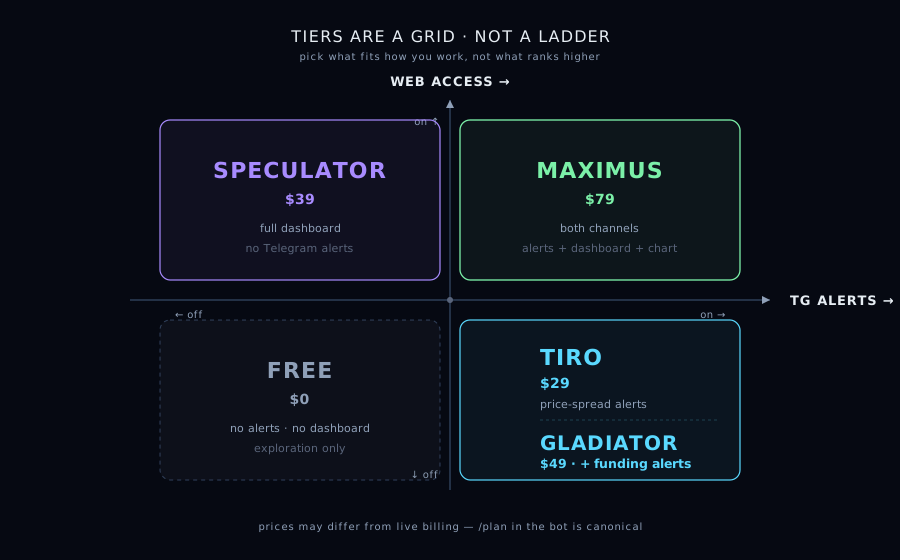
Gladiator and Speculator sit in different quadrants for a reason. One is Telegram-first with funding added. The other is web-first with the whole dashboard. Neither is "more" than the other. Pick the surface you'll actually use.
The Chart — your convergence lens and spread history chart
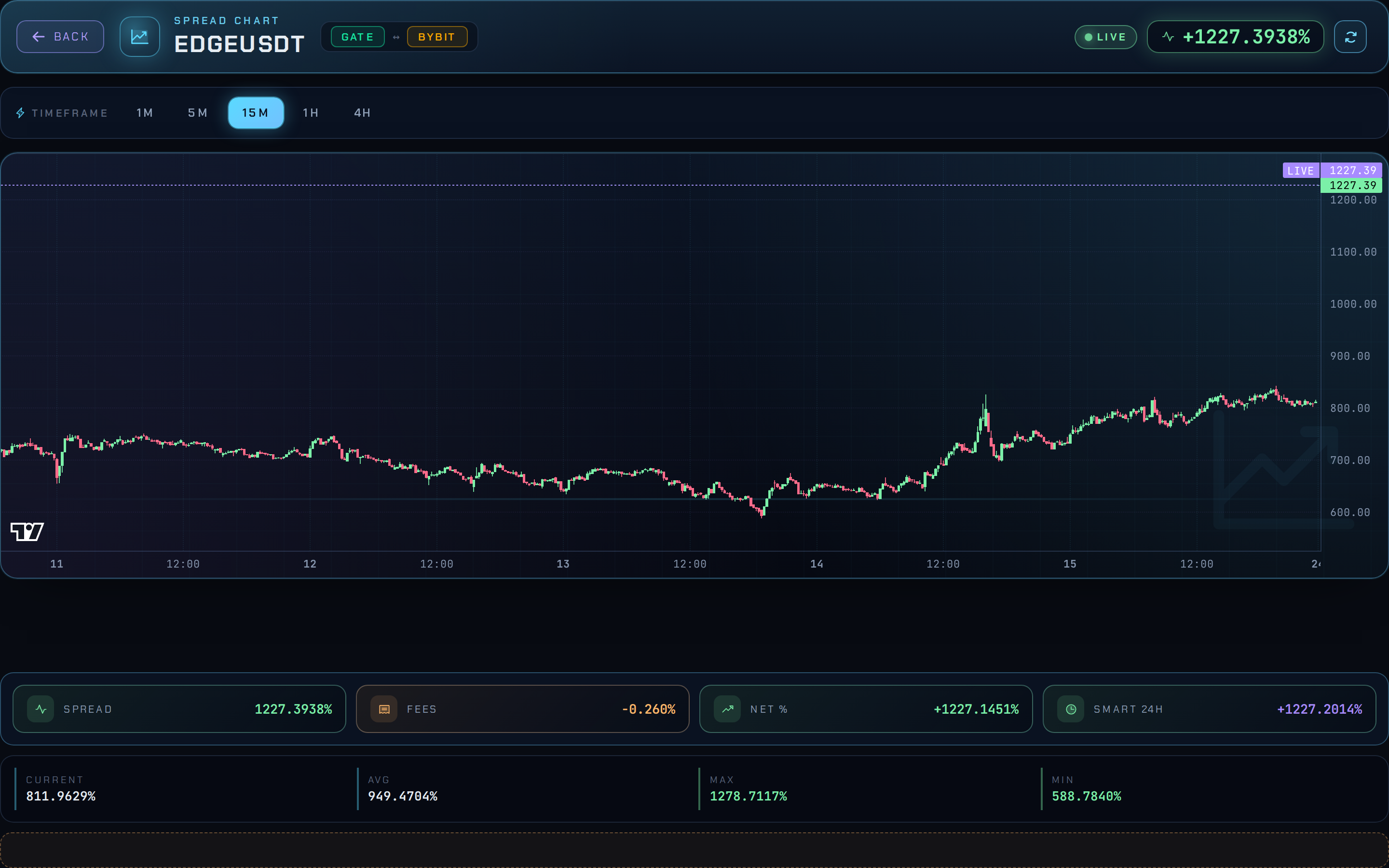
Most charting tools show you where a price has been. Our Chart shows you where the gap has been. You're not reading BTC — you're reading the distance between BTC on Exchange A and BTC on Exchange B.
What the Chart shows
A candlestick series of the spread itself. Five timeframes: 1m / 5m / 15m / 1h / 4h. Cyan grid for time, violet horizontals for reference levels. A legend block under the candles shows the live value; if the feed stops for more than 30 seconds, the data is explicitly flagged stale — no fake green dots.
How long history goes back
Spread history is saved every 60 seconds by our scheduler and retained for seven days. Enough to see the last few convergence cycles on most pairs. We don't yet store longer history — no fabricated "since 2023" charts.
Why spread history matters
A pair that's been oscillating between 0.5% and 3% tells you one story. A pair sitting at 2.5% that's been climbing for days tells a different one. The current Smart Spread 24h, on its own, doesn't distinguish those. You're looking for: how wide has the gap been historically, how fast does it close, is the shape symmetric.
Honest-gating
Chart is Speculator and Maximus. Tiro and Gladiator see an upgrade hint under each alert instead of a broken button: "Full convergence chart on the web — included with Speculator or Maximus."
Paper Arena — a crypto arbitrage simulator with filter parity
Paper Arena is the simulator. Real market data, simulated entries and exits, no money at risk. The point is to test a filter preset before you deploy it with live capital.
How a session works
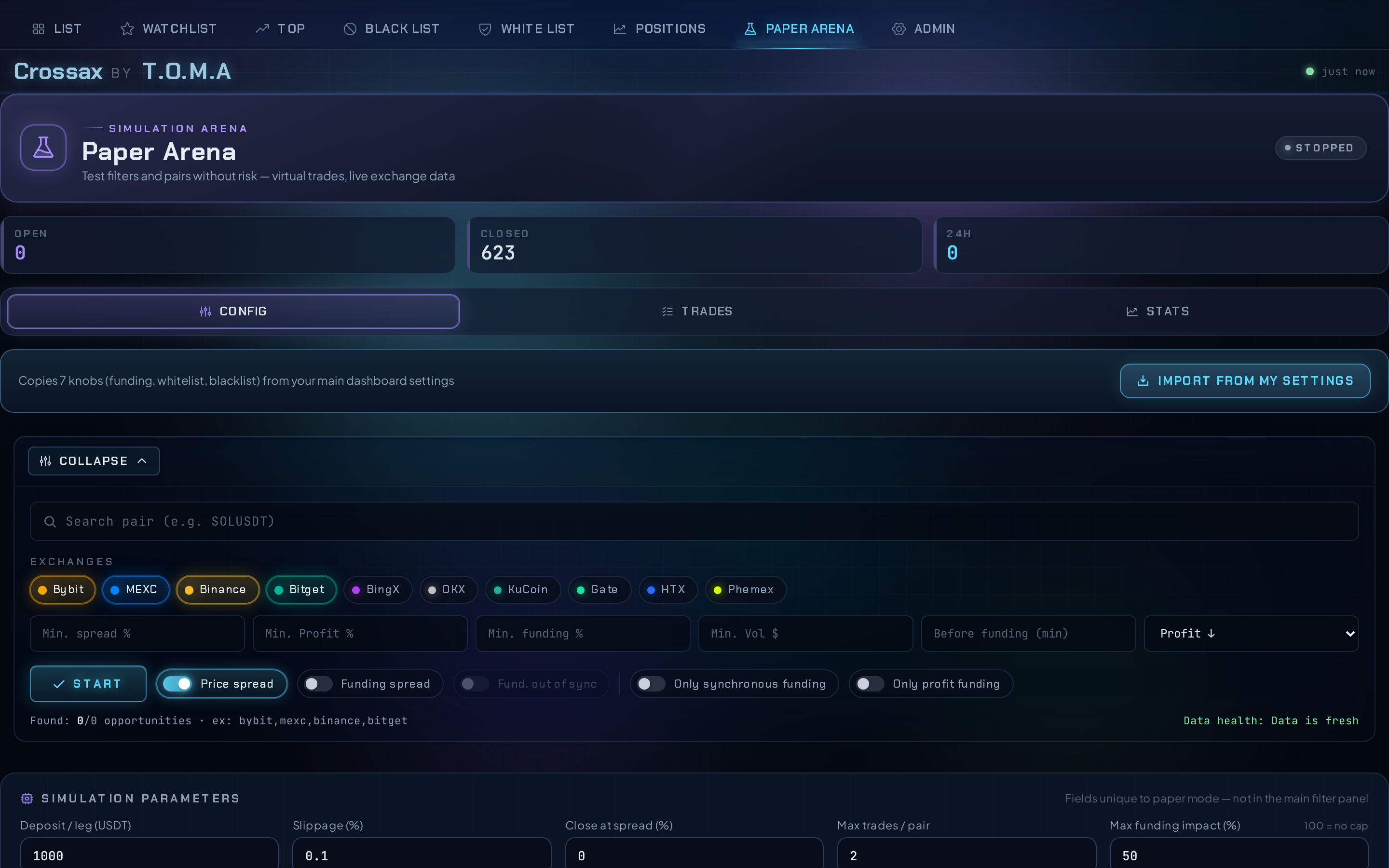
You create a session with a name and a filter config. The engine ticks every 20 seconds. On each tick, it checks whether any pair matches. If yes, it opens a simulated trade at the current ask and bid, accounting for four taker fees and any slippage you configured, then tracks the trade. When price spread tightens below your close threshold, it closes and records the result.
Filter parity
Paper Arena uses the exact same filter predicates as the live alert engine. All eleven fields map one to one. Click Import from settings and your Telegram filter config copies into the session. What you test here is what you'd get live.
Limits and retention
- Up to 50 open simulated trades per session.
- Up to 1,000 total trades per session, lifetime.
- Closed trades retained for 90 days, then purged.
- Sessions idle for 30 days auto-pause.
What Paper Arena is not
Not a backtest. Paper Arena runs forward, on live data. We don't replay historical ticks. And a profitable paper session doesn't mean the next live one will be profitable — markets change. The point is to learn how your filter set behaves before risking capital.
Paper Arena is on Speculator and Maximus. Dashboard-only, no Telegram surface.
Every command, one page
| /spreads | Live spread list, 5 per page |
| /top | Best spreads over 1 / 7 / 30 days · Speculator and Maximus |
| /alerts | Create, list, or remove named alerts (up to 15) |
| /settings | Filter, exchange, cooldown, mode |
| /positions | Manual tracker · Speculator and Maximus |
| /plan | Current plan and feature matrix |
| /subscribe | 3-stage billing flow |
| /redeem <CODE> | Activate a trial or invite code |
| /webapp | Mint a single-use 10-min magic link |
| /faq | Six-category FAQ hub |
| /trial | Free 72-hour Maximus trial gate |
| /help | Full command list |
| /start | Welcome message and deep-link routing |
Spreads · Alerts · Top Spreads · Black list · Whitelist · Watchlist · Positions · Settings · FAQ · Chart (Web)
A handful of language-switch commands exist for owners and admins only. You won't see them on the help menu, and you don't need them — English is the default for every new user.
Three presets to start from
These are starting points, not advice. Every trader's tolerance for alert volume, capital at risk, and hold time is different. Pick the preset that matches your current patience, run it for a week in Paper Arena, then tune.
Careful
Balanced
Aggressive
One rule for all three: run any preset in Paper Arena for a week before running it live. If the simulated results don't match your expectations, tune the filters before risking capital. That's what the sandbox is for.
What Crossax does not do
A short, honest list. Knowing what a tool isn't is as useful as knowing what it is.
- No auto-execute. We don't place, modify, or cancel orders on any exchange. You trade with your own account, through your own interface.
- No custody. Your funds live on your exchanges. We never hold them and never ask you to deposit anything with us.
- No API keys. Since we don't trade for you, we never request exchange API credentials. You're not granting us any permission you'd have to revoke later.
- No signal channel. We don't publish opinions about where markets are going. What we send is data, already filtered by your rules.
- No backtesting. Paper Arena runs on live data, going forward. We don't replay historical ticks against your filters.
- No portfolio sync. Positions you log in the Positions tab are manually entered. We don't pull your balance or order history from exchanges.
- No email or SMS. All notifications go through Telegram. That's the only channel.
- No mobile app. The dashboard is a web app. It works in a mobile browser, but there's no App Store or Play Store build.
- No refunds on paid periods. Crypto payments settle on-chain and are final. We say this up front so there are no surprises.
- No auto-renewal. Each subscription term starts manually on
/subscribe. You decide each cycle.
We'd rather tell you these boundaries than pretend they don't exist.
FAQ, short answers
Real questions from real users, answered in one or two lines. The full FAQ, with links, examples, and diagnostic steps, lives on /faq inside the bot.
monitor_enabled off. Roughly four in five "no signals" questions come from one of those. The rest is usually cooldown.Full answers on /faq inside the bot. Six categories, one tap each.
Fine print
Educational content. Not financial advice.
This guide is learning material. It explains how price-spread and funding-rate arbitrage work, and how Crossax surfaces them. Nothing inside is a recommendation to buy, sell, or hold any asset.
Crossax is not a registered investment adviser, broker-dealer, or financial institution. No one on our team is licensed to give you financial, investment, legal, or tax advice. Treat every example as an illustration of the mechanics, not a suggestion about what to do with your money.
Past performance does not predict future results. Any historical spread figure, convergence time, or Smart Spread 24h reading you see in this guide or on the product reflects conditions at a point in time. Markets move. Those numbers will not repeat.
Crypto is volatile. You can lose your entire position, or more. Perpetual futures carry leverage. Leverage amplifies both gains and losses. Funding payments, liquidations, exchange downtime, and withdrawal freezes are real risks you carry, not Crossax.
Crossax is a monitoring tool, not an executor. We never place, modify, or cancel orders on your behalf. We never request your exchange API keys. We never hold your funds or private keys. Every trade is yours. Every consequence of every trade is yours.
Service availability depends on where you are. Crossax may not be available in jurisdictions where crypto-asset services or derivatives are restricted. You are responsible for checking your local laws before using the product. See our Terms of Service for the current list of restrictions.
Billing is crypto-only and final. Payments are processed on-chain through a third-party processor. Once a transaction confirms, it cannot be reversed. There are no refunds on paid periods. Subscriptions do not auto-renew; each new term is started manually.
Trade carefully. Happy hunting.